
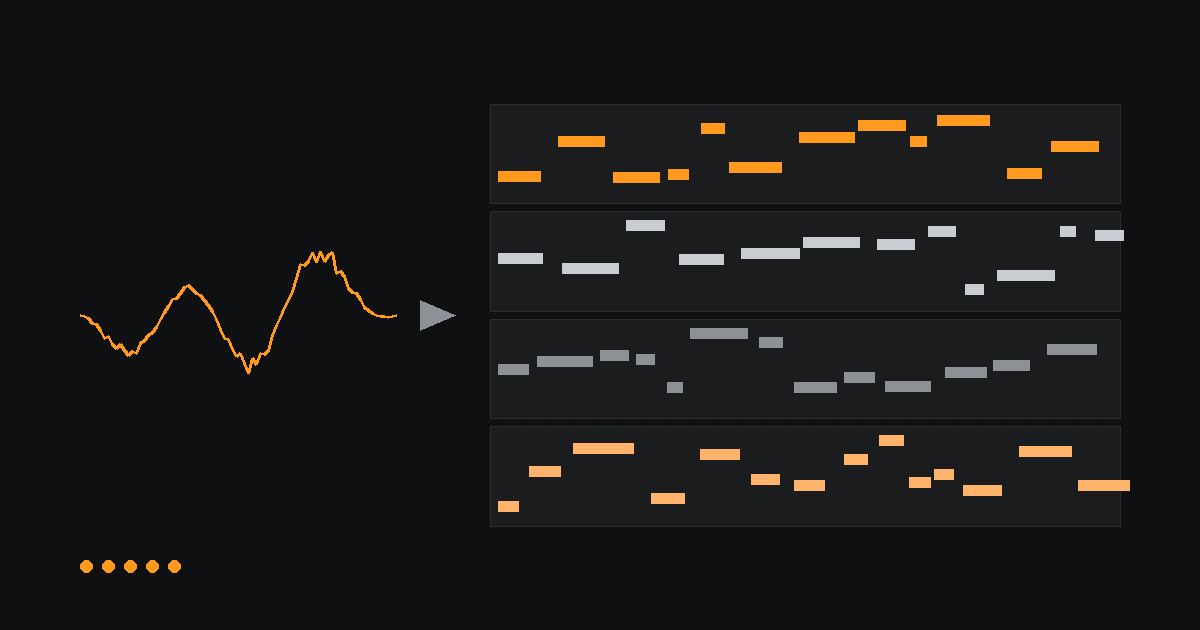
Almost everyone has a melody in their head. Very few turn it into a song. The gap is not talent: it is process. A melody is one ingredient; a song also needs harmony, rhythm, a bass line, structure and eventually lyrics and sound. This guide walks through a practical process to get from “I can hum it” to “I have a song sketch”, even if you do not play an instrument.
Step 1: Capture the idea before it disappears
Ideas fade fast. Record it immediately, however rough. A phone voice memo is fine. Do not worry about quality; you are saving the shape of the melody and its rhythm.
- Hum it two or three times in a row.
- Tap your foot or clap so you remember the tempo.
- Say a word or two describing the mood (“sad, slow”, “bouncy, trap”).
Step 2: Get the melody into MIDI
To build on the melody, you need it as editable notes. You can play it by ear on a keyboard, use your DAW’s audio-to-MIDI, or hum it into a tool that detects pitch. In KIOSK HUM, choose Mic (hum / sing), set the BPM and number of bars, turn on the metronome and count-in, and record. Full walkthrough: How to Turn a Hummed Melody into MIDI.
Step 3: Find the key and the mood
Most melodies sit comfortably in a key. A simple test: does it feel bright and resolved (often major) or darker and more tense (often minor)? You do not need theory to decide. Try both and keep what matches the feeling you described in Step 1. In KIOSK HUM you can switch between major and minor before generating.
Step 4: Add chords that support the melody
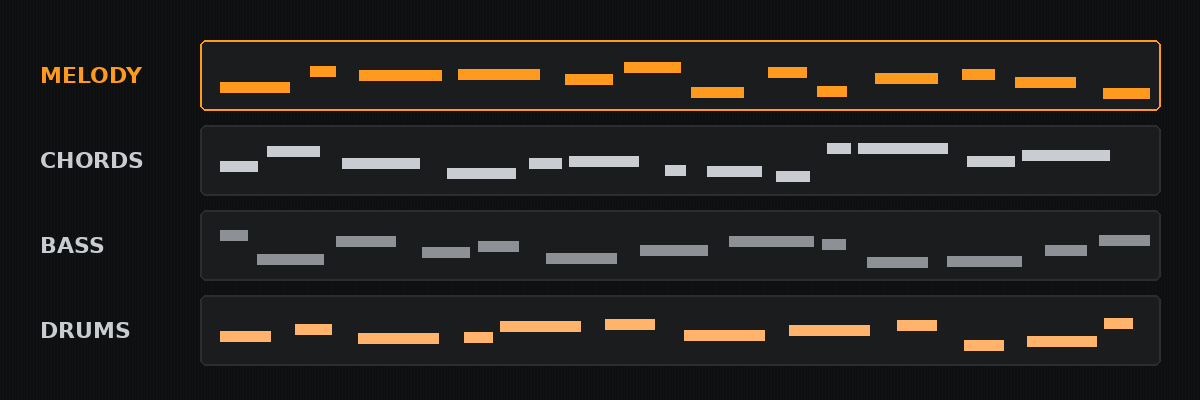
Chords are the emotional floor under your melody. A few beginner-friendly rules:
- Change chords where the melody lands. Long or accented melody notes are natural places for a new chord.
- Pick chords that contain the main melody note. If the melody holds an E, chords that include E (like C major or A minor in the key of C) will sound stable.
- Start simple. Four chords that repeat are enough for a huge number of popular songs.
- Try one chord per bar before trying faster changes.
Step 5: Add a bass line
The easiest bass line plays the root note of each chord, on the first beat of the bar. Once that works, add rhythm: repeat the note on off-beats, or walk up to the next chord. The bass glues chords and drums together, so keep it simple at first.
Step 6: Add drums that fit the genre
Drums tell the listener what kind of song this is. A basic pop or rock pattern has a kick on beats 1 and 3 and a snare on 2 and 4. Trap and hip-hop usually use sparse kicks, a snare or clap on beat 3 at half-time feel, and fast hi-hats. Pick one pattern and loop it under your chords.
A shortcut: generate the arrangement, then edit
Steps 4 to 6 are where most people get stuck. KIOSK HUM can generate them for you: after recording your melody, press Generate and it builds drums, bass, chords and a lead around it as a multi-track MIDI song. You can also type a short prompt describing the idea, in English or Spanish, and edit the chips before generating. Treat the result as a first draft: delete notes, add notes, regenerate, and keep what you like.
Step 7: Build a simple structure
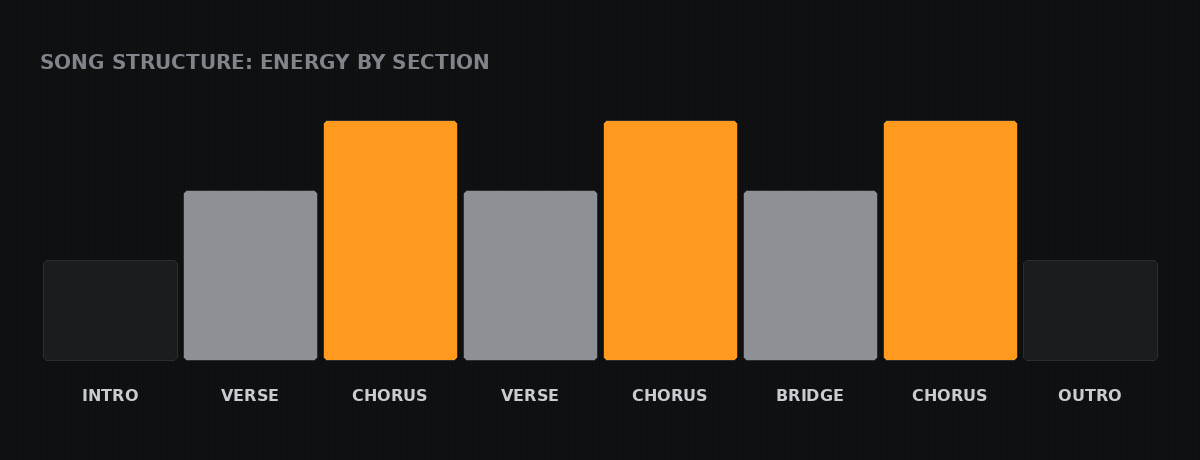
A loop is not a song yet. Use sections:
| Section | Purpose | Simple idea |
|---|---|---|
| Intro | Set the mood | Chords only, no drums |
| Verse | Tell the story | Melody, lighter drums |
| Chorus | The hook | Your strongest melody, full drums |
| Bridge | Contrast | New chords or half the instruments |
| Outro | Close | Strip back to chords or melody |
Your hummed melody is often the chorus. Write a calmer variation for the verse.
Step 8: Move to your DAW
Export your MIDI (in KIOSK HUM, use MIDI ZIP) and import the files into Ableton, FL Studio, Logic, Reaper or any DAW. Each part arrives on its own track, so you can choose sounds, adjust velocities, and start producing.
Step 9: Lyrics (optional)
If the song needs words, sing nonsense syllables over the melody first and listen for vowel sounds and rhythms that feel natural. Then replace them with real words that keep the same rhythm. The melody usually tells you how many syllables each line wants.
Common mistakes
- Polishing too early. Finish a rough full sketch before tweaking sounds.
- Too many chords. Simple progressions let the melody shine.
- Losing the original feel. Re-listen to your first voice memo; it holds the emotion.
- Never exporting. Save versions. A finished rough song beats a perfect eight-bar loop.
FAQ
Can I write a song without playing an instrument?
Yes. If you can hum or sing a melody, you can capture it as MIDI and build chords, bass and drums with software. Many producers work mostly in a piano roll.
Should I start with the melody or the chords?
Either works. If the melody arrived first, keep it as the anchor and choose chords that contain its most important notes.
How long should a first song sketch be?
Aim for a verse and a chorus, roughly 16 to 32 bars. That is enough to judge whether the idea is worth finishing.
What if the generated parts do not fit my idea?
Regenerate, switch between major and minor, change the tempo, or delete parts and keep only the ones that work. The goal is a draft you can edit, not a final track.
Start with the melody you already have
You do not need to learn an instrument before writing songs. You need a repeatable process: capture, convert to MIDI, add harmony and rhythm, structure, then produce.
Try KIOSK HUM free: hum your melody and get a multi-track MIDI song back in your browser.